Industries
Civic and cultural acoustics
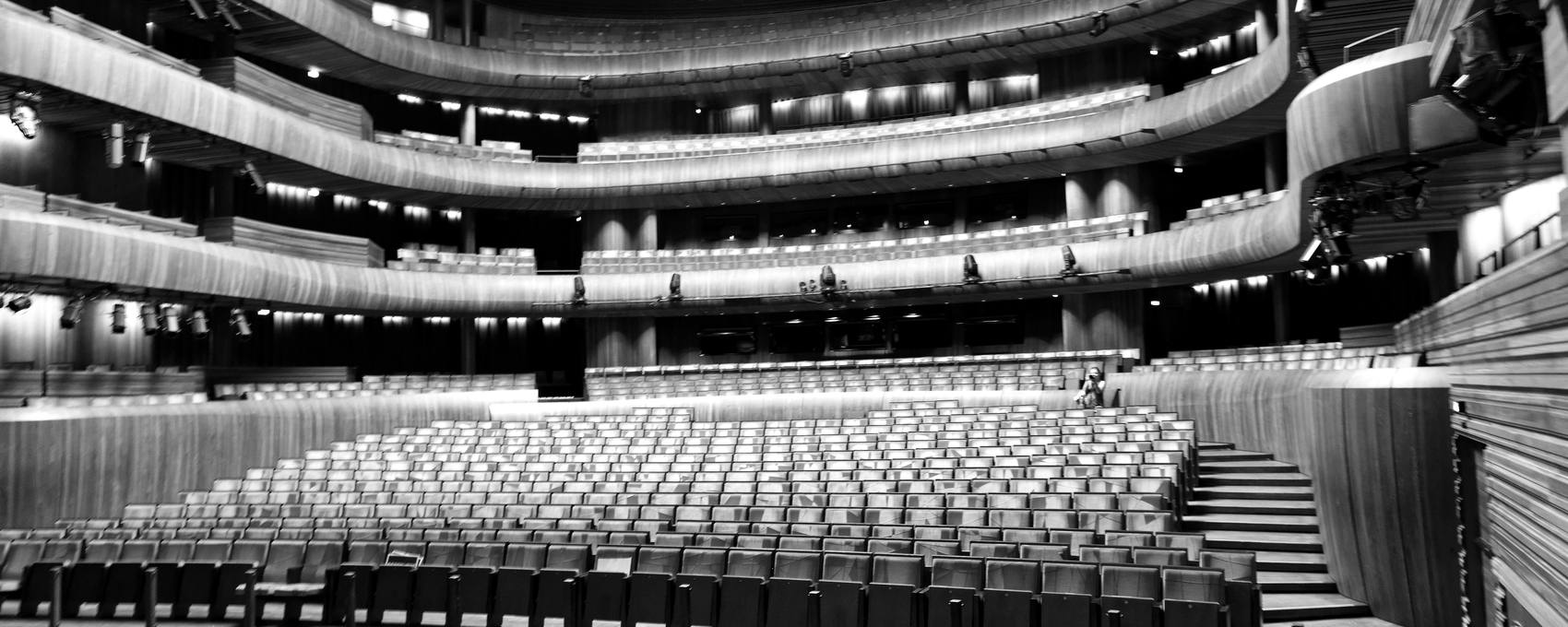
Civic and cultural buildings are the rare case where acoustics needs no arguing for. In a theatre, a council chamber or a community hall, how the room sounds is not a comfort issue sitting behind the design. It is what the building is for, and everyone on the project already knows it.
They have also become far more ambitious. A single municipal building now routinely holds a gym, a pool, programme rooms, a library branch, a daycare and an event space, because that is how a community gets the most out of one budget. That is a good instinct and it makes for buildings people actually use. It also puts uses next to each other that were never adjacent before, and the acoustics is what decides whether all of them work at once or whether the schedule has to be managed around the conflicts for the next fifty years.
Our experience
The engineers at Bentham have worked as acoustical consultants on civic and cultural projects across Canada, from federal parliamentary accommodation and courthouses through to community and recreation centres, cultural centres, museums and libraries.
The work runs the full length of a project. Design of performance and assembly space, council chambers, gymnasiums, aquatic facilities and studios, through to construction review and the commissioning and verification testing that confirms the rooms actually perform. On a courthouse, the requirements are demanding and meeting them in practice is not trivial, which is why the verification work matters as much as the specification.
Two projects give a sense of the range. One is a large federal redevelopment combining heritage retrofit, new construction and mass timber across a single block, holding offices, committee rooms and chambers alongside public and retail space, with acoustic and speech security requirements running through all of it. The other is a community centre built inside a derelict heritage factory, where the programme called for gyms and multipurpose rooms inside a structure that had trees growing through the roof when we arrived.
Bentham Acoustics is new. Its engineers are not. The projects described here were carried out by Bentham engineers over their careers, at this firm and before it.
A full list of relevant project experience is available on request.
What we work on
Adjacencies that did not used to exist.
A gym above a multipurpose room. An atrium that doubles as event space beside quiet programme rooms. A daycare over a mechanical room. These combinations are decided in the first weeks of a project, in plan and in section, and they set the ceiling on what the building can do. Resolving them at that stage is the highest-value work on these projects by a wide margin.
Rooms asked to do more than one thing.
A council chamber that also serves as a performance venue. A gymnasium that hosts assemblies. A hall that runs speech one night, amplified music the next and a banquet the week after. Those uses want different room acoustics, and a room that does all of them acceptably is a design outcome rather than an accident.
Libraries and open programme space.
Libraries now hold makerspaces, children’s areas, collaboration space and quiet study in one volume. Letting those coexist is mostly a planning and absorption question, and it is what determines whether staff spend the next decade policing the room.
Arenas, pools and gymnasiums.
Large hard-surfaced rooms are the most complained-about spaces in municipal recreation buildings, usually because the public address system cannot be understood over the reverberation. Treating the room and specifying the system together is what fixes it.
Chambers, microphones and the stream.
Council chambers have to work for the people in the room, for the microphones, and for whoever is watching the recording. Speech intelligibility, background noise and the AV system are one problem, and separating them produces a chamber that sounds fine in person and unusable online.
Plant, events and the neighbours.
Civic buildings sit in neighbourhoods. Rooftop plant, late programming, outdoor stages and parking all become municipal noise complaints, and the municipality is usually both the operator and the enforcer.
Standards and requirements in Ontario
There is no code requirement setting room acoustic criteria for civic and cultural buildings. Requirements come from the project’s own design brief, municipal standards, and the use of each room.
In practice the references are established criteria for reverberation time and background sound level by room type, ASHRAE criteria for mechanical background levels, and speech intelligibility criteria where a public address or voice alarm system is involved. Assistive listening provisions apply in assembly occupancies. Where a building has residential neighbours, its mechanical plant and event noise are assessed under MECP publication NPC-300 and under the municipal noise by-law.