Industries
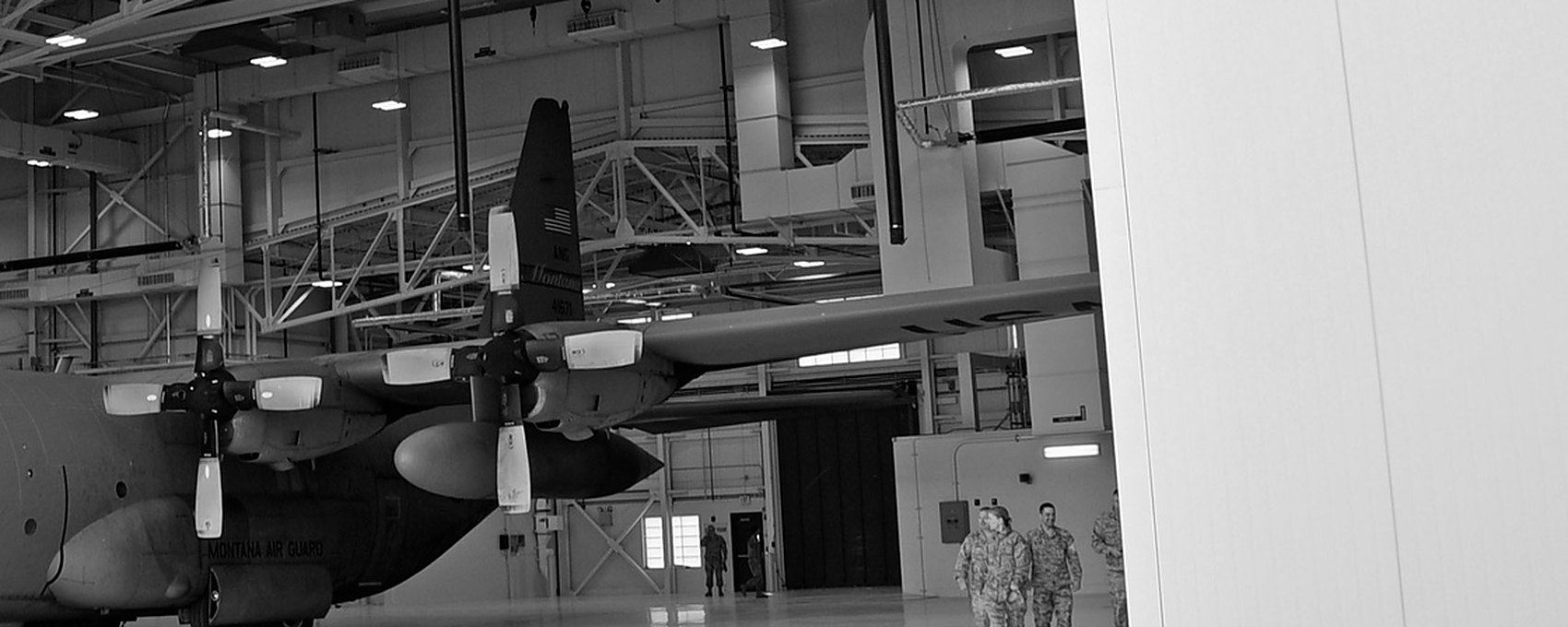
Defence and secure facilities
Defence facilities ask more of acoustics than almost any other building type. One site can carry conversation that has to stay in the room, a simulator that has to feel real, plant running continuously, aircraft overhead, live fire on the range, and equipment sensitive enough that the floor it stands on becomes part of the specification. Each of those is a different problem with a different method behind it.
The breadth is what makes this work worth doing. Taken singly, each of these is well understood. Held together on one site, under a security regime that limits who can see what, they pull against each other, and the resolution is almost never found inside acoustics alone. It comes out of the architecture, the structure, the mechanical design and the way the facility is actually operated. Working that out with the rest of the team, on buildings that matter this much, is the part of the job we enjoy most.
Our experience
The engineers at Bentham have worked as acoustical consultants on defence and national security facilities across Canada: secure offices and sensitive discussion areas, simulator and training buildings, research laboratories, environmental and shaker testing halls, ranges close to residential neighbours, messes and accommodation, and federal redevelopments where secure space sits inside a working public building.
Much of this work cannot be described in detail, which is the nature of it. What can be said is that it has run from early planning through design and construction to the verification testing these spaces are signed off against.
Bentham Acoustics is new. Its engineers are not. The projects described here were carried out by Bentham engineers over their careers, at this firm and before it.
A full list of relevant project experience is available on request.
What we work on
Secure spaces and speech security.
Sensitive discussion areas, secure offices and briefing rooms, including SCIF design, where the envelope, the doors and every service that penetrates them have to hold the same line. These rooms are proven by measurement once they are built, and Speech Privacy Class testing to ASTM E2638 puts a number on what a room actually delivers. Designing to a number that will be measured is a good discipline, and it makes the conversation with the design team a concrete one.
Simulator and training facilities.
A simulator needs the room quiet and still enough that the simulation reads as real, while the unit itself pushes a great deal of noise and vibration into every space around it. The two requirements pull in opposite directions, and the answer is usually architectural rather than acoustic: where the unit sits, what it sits on, and what is next door. It is one of the more satisfying problems in the field.
Impulse noise, which does not behave like the rest.
Live fire, demolition training and blast produce short, high energy events that are measured and judged differently from continuous noise. Choosing and defending the right metric is where the expertise sits, and doing it properly usually shows that more of the site works than a cautious assumption would allow.
Equipment that sets the specification.
Testing halls, shaker facilities and research laboratories where the equipment's own criteria govern the floor, the structure and the services around it. The building gets designed to the instrument, which means working back through the structural and mechanical design with the rest of the team from the first sketch.
What the installation sends beyond the fence.
Ranges, airfields, plant and traffic all reach the community around a base. A base that is a good neighbour has an easier time doing everything else, and that standing is built deliberately, through what gets assessed early and what gets designed in.
Building on an active installation.
Operations carry on throughout, so the sequencing gets worked out with the contractor and the base, and the limits are agreed before the first machine arrives. Done well it is largely invisible, which is the point.
Standards and requirements
Secure spaces are governed by federal requirements that set what a sensitive discussion area has to achieve and that require it to be verified after construction rather than assumed. We design and test to those requirements, and we are deliberate about what is said about them in public.
Speech Privacy Class, measured under ASTM E2638, gives a defensible number for what a closed room delivers in practice. The research behind the criteria was done here, at the National Research Council.
Outside the secure envelope, federal land works differently from a civilian site. A project there is assessed under the Impact Assessment Act, where the responsible federal authority determines whether it is likely to cause significant adverse environmental effects. Provincial noise guidelines and municipal by-laws do not apply as law, and there is no federal equivalent to replace them, so in Ontario the assessment is usually written against NPC-300 anyway. It is the reference every reviewer recognises, and a conclusion reached against it is easier to defend than one reached against a yardstick invented for the occasion. In the National Capital Region, projects on federal land also need the National Capital Commission’s land use and design approval.
Impulse noise is judged against metrics suited to impulsive sources, and vibration affecting sensitive equipment against the equipment’s own criteria rather than a general standard.